

Paint Protection Film (PPF) has become a popular choice for car owners who want to preserve their vehicle’s original paintwork. Among the latest advancements in automotive protection, self-healing PPF stands out because it can recover from certain minor surface scratches and marks.
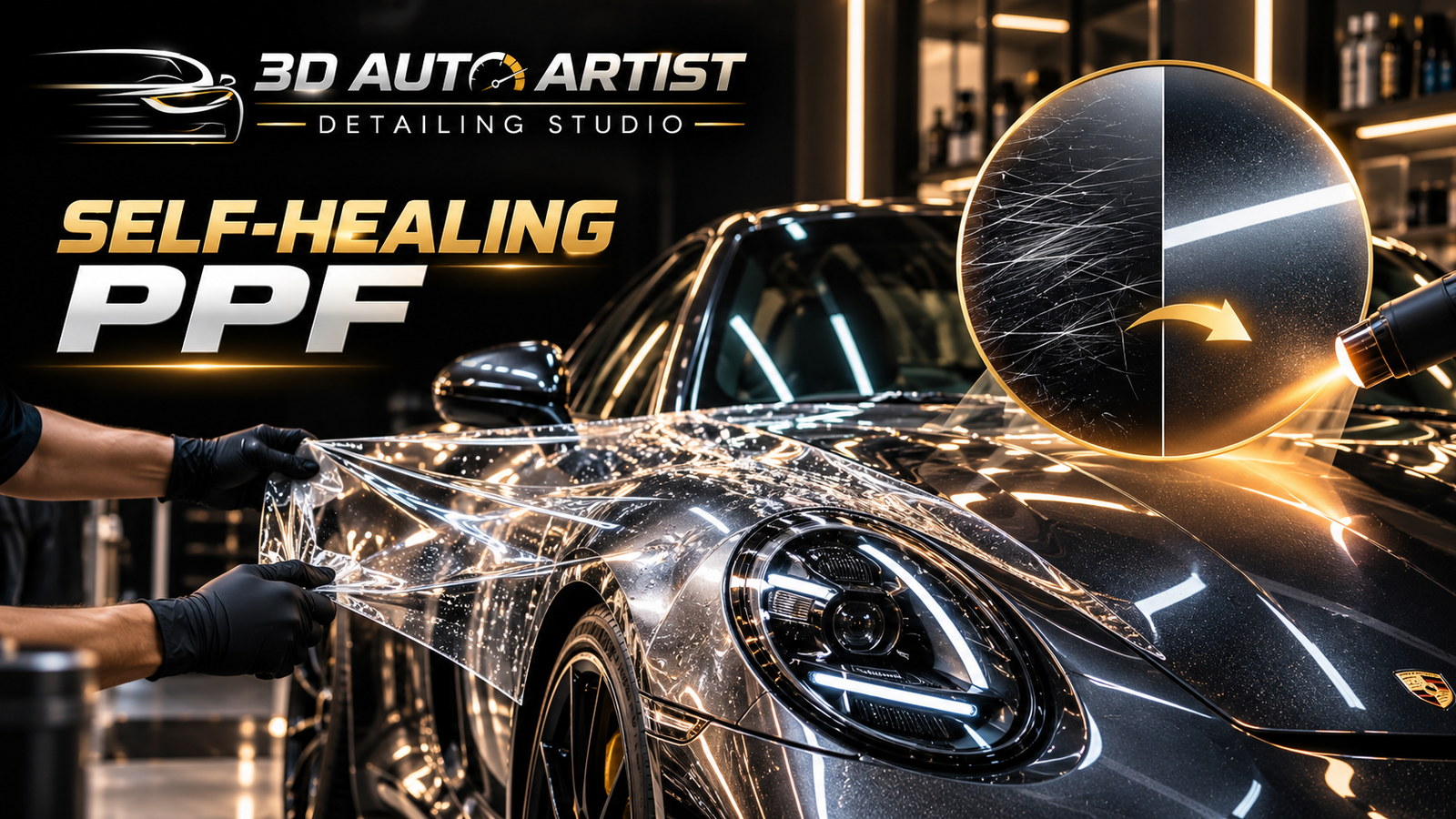
But how does self-healing PPF actually work? What makes it different from conventional PPF, and is it suitable for your car? This guide explains the technology, benefits, limitations, and important factors to consider before choosing self-healing paint protection film.
What Is Self-Healing PPF?
Self-healing PPF is a transparent protective film designed to shield a vehicle’s paint from everyday surface damage while offering a self-repairing top layer.
The film typically consists of multiple layers, including a durable top coat, protective polyurethane layer, and adhesive layer. The top surface contains properties that allow certain minor scratches and swirl marks to gradually disappear when exposed to heat.
Unlike traditional methods of paint protection, self-healing PPF provides both physical protection and surface recovery. This helps maintain a clean, glossy appearance for longer.
How Does Self-Healing PPF Work?
The self-healing process is primarily associated with the film’s advanced top coat. When a minor scratch affects the surface, controlled heat can help the material return toward its original smooth condition.
Heat may come from:
- Natural sunlight
- Warm environmental temperatures
- Warm water
- Controlled heat applied during professional detailing
As the film warms up, its top layer becomes more flexible. This allows shallow scratches and light surface marks to gradually level out.
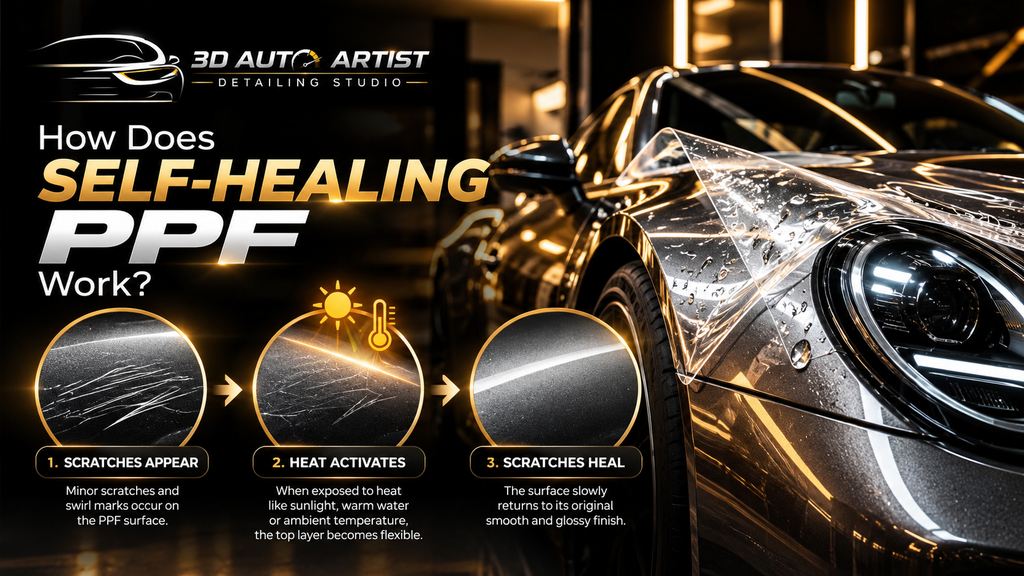
However, self-healing PPF is not designed to repair deep cuts, severe impact damage, or scratches that have penetrated through the film.
What Types of Damage Can Self-Healing PPF Reduce?
One of the major advantages of self-healing paint protection film is its ability to deal with common cosmetic marks caused by everyday driving and washing.
Minor Scratches
Light scratches caused by accidental contact or routine use may gradually disappear when the film is exposed to suitable heat.
Swirl Marks
Incorrect washing techniques can create fine circular marks on a vehicle’s surface. A quality self-healing PPF can help reduce the visibility of these light marks.
Light Washing Damage
Frequent washing can create small surface imperfections over time. PPF creates a protective barrier between these effects and the original paint.
Road Debris
PPF also provides a physical layer between the paint and small road particles. This is particularly useful on high-impact areas such as the front bumper, bonnet, fenders, and mirrors.
Key Benefits of Self-Healing PPF
Choosing self-healing PPF can provide several advantages beyond basic paint protection.
1. Helps Preserve Original Paint
The film acts as a barrier over the factory paint, helping reduce exposure to everyday scratches and surface damage.
2. Maintains a Glossy Appearance
A high-quality PPF can help maintain the visual appeal of a vehicle by protecting its paint from common cosmetic damage.
3. Reduces Minor Surface Scratches
The self-healing top coat can recover from certain light scratches when appropriate heat is applied.
4. Helps Protect Vehicle Resale Appeal
Maintaining the original paint condition can be valuable when you eventually decide to sell or upgrade your vehicle.
5. Easier Long-Term Paint Maintenance
Because the film takes much of the everyday surface abuse, maintaining the appearance of the underlying paint can become easier.
Self-Healing PPF vs Traditional PPF
The main difference between standard PPF and self-healing PPF is the technology used in the surface layer.
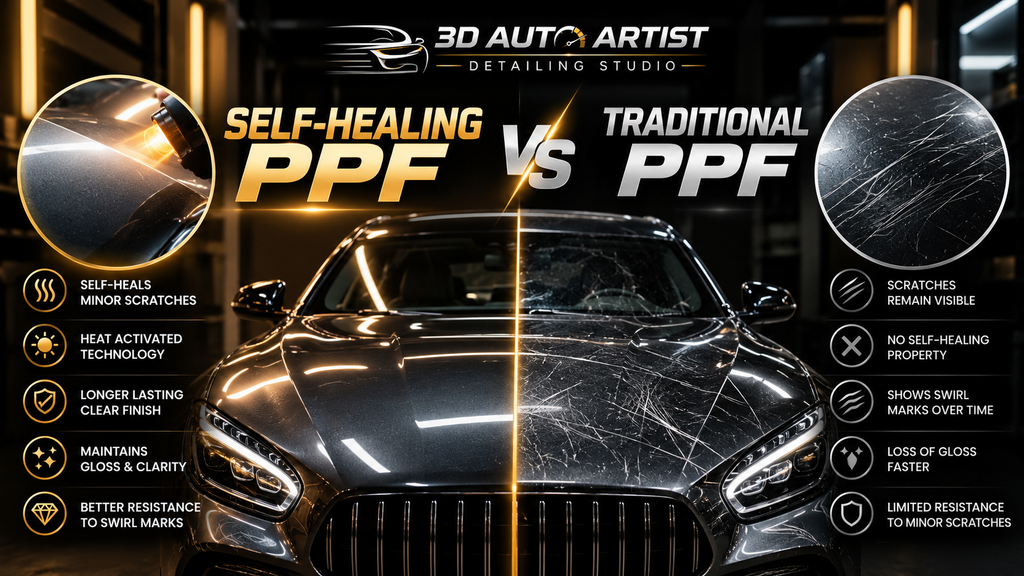
Traditional PPF can provide excellent protection against scratches, stone chips, and environmental exposure. However, it may not have the same ability to recover from light surface marks.
Self-healing PPF, on the other hand, incorporates a specialized top layer designed to reduce the appearance of certain minor scratches and swirl marks.
The actual performance depends on the film’s construction, quality, installation, maintenance, and the severity of the damage.
Is Self-Healing PPF Completely Scratch-Proof?
No. Self-healing PPF should not be considered completely scratch-proof.
The technology is designed primarily for minor surface imperfections. Deep scratches, sharp-object damage, major impacts, and severe abrasions can still damage the film.
This distinction is important when choosing PPF. The purpose is not to make the vehicle completely immune to damage but to provide an additional protective layer that absorbs many everyday threats.
Where Should Self-Healing PPF Be Installed?
PPF can be installed on different parts of a vehicle depending on the owner’s requirements and driving conditions.
Commonly protected areas include:
- Front bumper
- Bonnet
- Front fenders
- ORVMs
- Door edges
- Door cups
- Headlights
- Side skirts
- Full vehicle exterior
For vehicles frequently driven on highways, a full-front or full-car PPF installation can provide broader protection than covering only selected panels.
Why Professional PPF Installation Matters
Even a premium PPF can deliver disappointing results if it is installed incorrectly. Proper surface preparation, accurate pattern alignment, controlled installation, and finishing are essential for a clean result.
At 3D Auto Artist, PPF installation focuses on accurate application, careful surface preparation, and attention to panel edges and finishing details. The objective is to protect the vehicle while maintaining a clean and refined appearance.
Professional installation can also help minimize issues such as visible edges, trapped contaminants, lifting, and uneven application.
How to Maintain Self-Healing PPF
Proper maintenance can help extend the appearance and performance of your PPF.
Use Proper Washing Techniques
Use a clean microfiber wash system and avoid aggressive brushes or abrasive materials.
Avoid Harsh Chemicals
Choose products that are suitable for PPF and avoid unnecessarily strong chemicals that may affect the film’s surface.
Do Not Aggressively Polish the Film
Traditional paint polishing methods should not automatically be applied to PPF. Always check whether a product is compatible with the specific film.
Remove Contaminants Promptly
Bird droppings, tree sap, and other contaminants should be removed carefully rather than being left on the film for extended periods.
Is Self-Healing PPF Worth It?
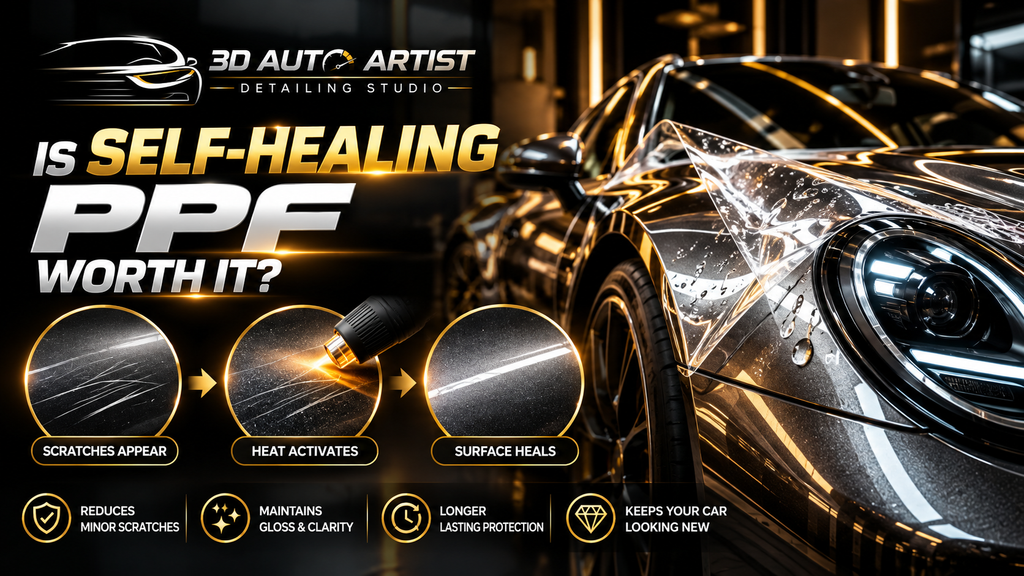
For car owners who want to preserve their vehicle’s factory paint while reducing the appearance of everyday surface scratches, self-healing PPF can be a practical paint protection solution.
Its biggest advantage is the combination of physical protection and self-healing surface technology. However, choosing the right film and ensuring professional installation are equally important.
Final Thoughts
Self-healing PPF represents a significant development in automotive paint protection. Its ability to recover from certain minor scratches, combined with its protective barrier against everyday damage, makes it an attractive option for maintaining a vehicle’s appearance.
From daily-driven cars to premium and luxury vehicles, the right PPF installation can help preserve the original paint and reduce the impact of everyday wear.
If you are considering PPF installation in Bangalore or Hyderabad, 3D Auto Artist can help you understand the available protection options based on your vehicle, usage, and coverage requirements.