

Paint Protection Film (PPF) has become one of the most effective ways to protect a vehicle’s original paint from stone chips, road debris, scratches, stains, and everyday wear. But installing PPF is not only about choosing a good film. Precision cutting and professional installation play an equally important role.

This is where a PPF plotter comes into the picture. Professional detailing studios such as 3D Auto Artist use advanced cutting technology to achieve accurate PPF patterns while reducing unnecessary cutting on the vehicle.
What Is a PPF Plotter?
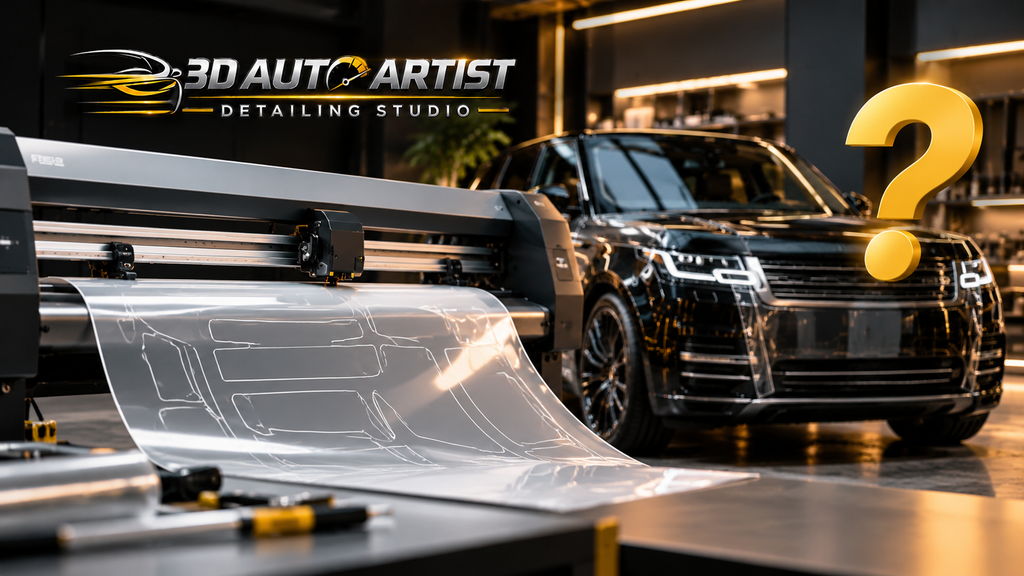
A PPF plotter is a precision cutting machine used to cut Paint Protection Film according to digitally designed vehicle patterns.
Instead of placing a large sheet of PPF on the car and manually cutting around every panel, the installer can select the required vehicle model and panel pattern from specialized PPF pattern software.
The plotter then cuts the film to the required shape and dimensions.
This process helps installers achieve cleaner edges, accurate panel coverage, and consistent results across different vehicles.
How Does a PPF Plotter Work?
The process is relatively simple but requires professional knowledge and accurate pattern selection.
1. Select the Vehicle Pattern
The installer first identifies the exact vehicle model, variant, and panel that needs protection.
Professional pattern libraries can contain templates for areas such as:
- Bonnet
- Front bumper
- Fenders
- Doors
- ORVMs
- Headlights
- A-pillars
- Door cups
- Trunk areas
2. Prepare the Digital Pattern
The selected pattern is adjusted according to the required installation method. Depending on the panel, the installer may choose additional material for edge wrapping or other finishing requirements.
3. Load the PPF Into the Plotter
The PPF sheet is carefully positioned on the plotter. The machine uses a precision blade to follow the digital pattern.
The cutting depth is controlled carefully so that the film is cut without unnecessarily damaging the liner underneath.
4. Install the Cut Pattern
After cutting, the installer transfers the PPF onto the prepared vehicle panel and completes the installation using professional installation techniques.
The result is a more controlled and consistent fit compared with completely manual cutting.
Why Do Professional PPF Installers Use a Plotter?
Precise PPF Cutting
One of the biggest advantages of a PPF plotter is precision.
A digitally created pattern allows the installer to reproduce the same shape consistently. This is particularly useful for modern vehicles with complex body lines and sharply designed panels.
Reduced Risk During Installation
Manual cutting directly on a vehicle requires significant skill and control. A plotter allows the main cutting process to happen away from the vehicle.
This can significantly reduce the need for a blade to be used directly on the car’s painted surface.
Cleaner PPF Installation
Accurate patterns can help installers achieve cleaner panel coverage and more consistent edges.
For premium vehicles, small finishing details can make a major difference to the overall appearance of the installation.
Faster Workflow
Once the correct pattern is selected and prepared, a plotter can cut the required film efficiently.
This helps professional PPF studios handle installations more systematically, especially when multiple panels need protection.
Better Material Management
Digital cutting can also help reduce unnecessary film wastage. The installer can arrange patterns efficiently on the available PPF sheet before cutting.
For high-quality PPF, better material utilization can make the installation process more efficient.
Does a PPF Plotter Replace a Skilled Installer?
No.

A PPF plotter is a precision tool, but it does not replace professional installation skills.
The quality of a PPF installation still depends on factors such as:
- Correct pattern selection
- Surface preparation
- Film positioning
- Stretch control
- Edge finishing
- Contour handling
- Installation environment
- Experience of the installer
A good plotter combined with an experienced PPF installer produces much better results than relying on technology alone.
Plotter-Cut PPF vs Hand-Cut PPF
Both methods can be used by professional installers, depending on the panel and installation requirements.
Plotter-cut PPF provides digitally controlled patterns and consistent cutting, making it particularly useful for complex and high-value vehicle panels.
Hand-cut PPF gives an experienced installer flexibility when dealing with unusual shapes, custom coverage, or specific edge-wrapping requirements.
At a professional studio, the best approach is often to use technology and installer expertise together rather than depending entirely on one method.
Why Pattern Accuracy Matters in PPF Installation
A PPF pattern is more than just a simple outline of a vehicle panel.
The pattern needs to account for the panel’s curves, edges, body lines, gaps, and installation requirements. An inaccurate pattern can result in insufficient coverage, excessive material, difficult installation, or visible edges.
That is why professional PPF installation requires both reliable pattern software and an experienced technician.
PPF Plotter at 3D Auto Artist
At 3D Auto Artist, our approach to Paint Protection Film combines quality materials, precision cutting, professional preparation, and experienced installation.
From high-impact areas such as the front bumper, bonnet, fenders, ORVMs and headlights to customized PPF coverage, every installation is planned according to the vehicle and the customer’s protection requirements.
Our focus is not simply to apply PPF. It is to create a clean, precise and long-lasting paint protection solution that maintains the appearance of your vehicle.

Is Plotter-Cut PPF Better for Your Car?
For most premium PPF installations, a plotter provides an important advantage because it allows patterns to be prepared accurately and consistently.
However, the machine itself is only one part of the process. The film quality, pattern quality, preparation, installation technique and finishing work all contribute to the final result.
If you are considering Paint Protection Film for your car, choosing an experienced installer with the right equipment and installation process can make a significant difference.
Final Thoughts
A PPF plotter is an important piece of technology in modern automotive protection. It brings digital precision to PPF cutting, helps reduce unnecessary manual cutting, improves workflow, and supports cleaner installation results.
But great PPF installation is ultimately a combination of technology, quality film and skilled craftsmanship.
At 3D Auto Artist, we combine these elements to deliver professional Paint Protection Film installations designed to protect your vehicle while maintaining its original appearance.
Protect the paint. Preserve the finish. Choose precision.
Frequently Asked Questions About PPF Plotters
1. What is a PPF plotter?
A PPF plotter is a specialized cutting machine used to cut Paint Protection Film according to precise, vehicle-specific patterns. It helps professional installers prepare accurate film pieces for different parts of a vehicle without manually cutting directly on the paint.
2. Does a PPF plotter cut the car’s paint?
No. A properly operated PPF plotter cuts the PPF material itself before installation. This reduces the need for using a knife directly on the vehicle’s painted surface and helps minimize the risk of accidental paint damage.
3. Why do professional PPF installers use a plotter?
Professional installers use PPF plotters for precision, consistency, efficiency, and reduced material waste. Vehicle-specific patterns can be prepared accurately, making the installation process more controlled and repeatable.
4. Is plotter-cut PPF better than hand-cut PPF?
Plotter-cut PPF can provide greater consistency and precision because the film is cut using a digital vehicle-specific pattern. However, the final result still depends heavily on the installer’s preparation, positioning, stretching, wrapping and finishing skills.