When choosing Paint Protection Film (PPF) for your car, one of the first specifications people usually ask about is thickness. PPF is available in different thickness levels, and you may see terms such as 180 micron, 190 micron, 200 micron or more.

But does a higher micron number automatically mean better protection?
Not always. PPF thickness is important, but it is only one part of the film’s overall performance. Material quality, top-coat technology, self-healing properties, flexibility, adhesive quality and installation also matter.
At 3D Auto Artist, we believe understanding these factors helps car owners make a more informed decision when choosing PPF.
What Does PPF Thickness Mean?
PPF thickness refers to the physical thickness of Paint Protection Film, which is generally measured in microns (µm).
One micron is equal to 0.001 millimetres. Therefore, a 200-micron film is approximately 0.20 mm thick.
However, it is important to understand how a manufacturer defines its thickness. Some technical specifications include the adhesive layer, while others provide separate measurements for the film and adhesive.
For example, 3M lists several automotive PPF products around the 185–200 micron range. Its technical information also shows that film construction can include polyurethane, clear coat and adhesive layers.
This means that simply comparing two PPF products by their advertised micron number may not tell you everything about their performance.
Why Is PPF Thickness Important?
The main purpose of PPF is to create a protective layer between your car’s original paint and everyday road exposure.
While driving, the painted surface can come into contact with:
- Stone chips
- Road debris
- Dust and sand
- Insect contamination
- Minor scratches
- Road grime
- Environmental contaminants
A suitable PPF thickness can contribute to the film’s physical protection. However, the thickness needs to work together with the film’s material and other technical features.
That is why choosing PPF should involve more than simply looking for the highest micron specification.
Does More Micron Always Mean Better Protection?
No. More micron does not automatically mean better PPF.
A thicker film contains more material, but overall performance depends on how that material is engineered.
For example, two PPF products can have similar thickness while offering different levels of self-healing, stain resistance, clarity, hydrophobic performance or conformability.
3M’s product comparison demonstrates this clearly. Its 190-micron and 200-micron products have differences in features such as self-healing speed, conformability, stain resistance and warranty.
Therefore, PPF thickness should be considered alongside the complete film specification.
What Factors Should You Consider Along With PPF Thickness?
Film Material
The material used in PPF plays an important role in its performance. Modern automotive films commonly use polyurethane-based construction, including TPU-based materials.
The material can influence flexibility, durability and how the film behaves during installation.
Top-Coat Technology
The top coat forms the outer surface of the film. Depending on the product, it can influence gloss, stain resistance, hydrophobic behaviour and self-healing performance.
Some PPF products use self-healing technology that helps reduce the appearance of minor scratches when heat is applied to the film surface.
Adhesive Quality
The adhesive is another important part of PPF construction. A well-engineered adhesive helps the film bond properly to the vehicle while allowing suitable positioning during installation.
3M‘s technical documentation, for example, describes PPF construction using a polyurethane film with an acrylic pressure-sensitive adhesive.
Flexibility and Conformability
A car has many curved and complicated surfaces. The PPF needs to follow these contours properly during installation.
Good conformability can make it easier to achieve clean coverage around bumpers, mirrors, bonnet edges, fenders and other difficult areas.
What Is a Good PPF Thickness for a Car?
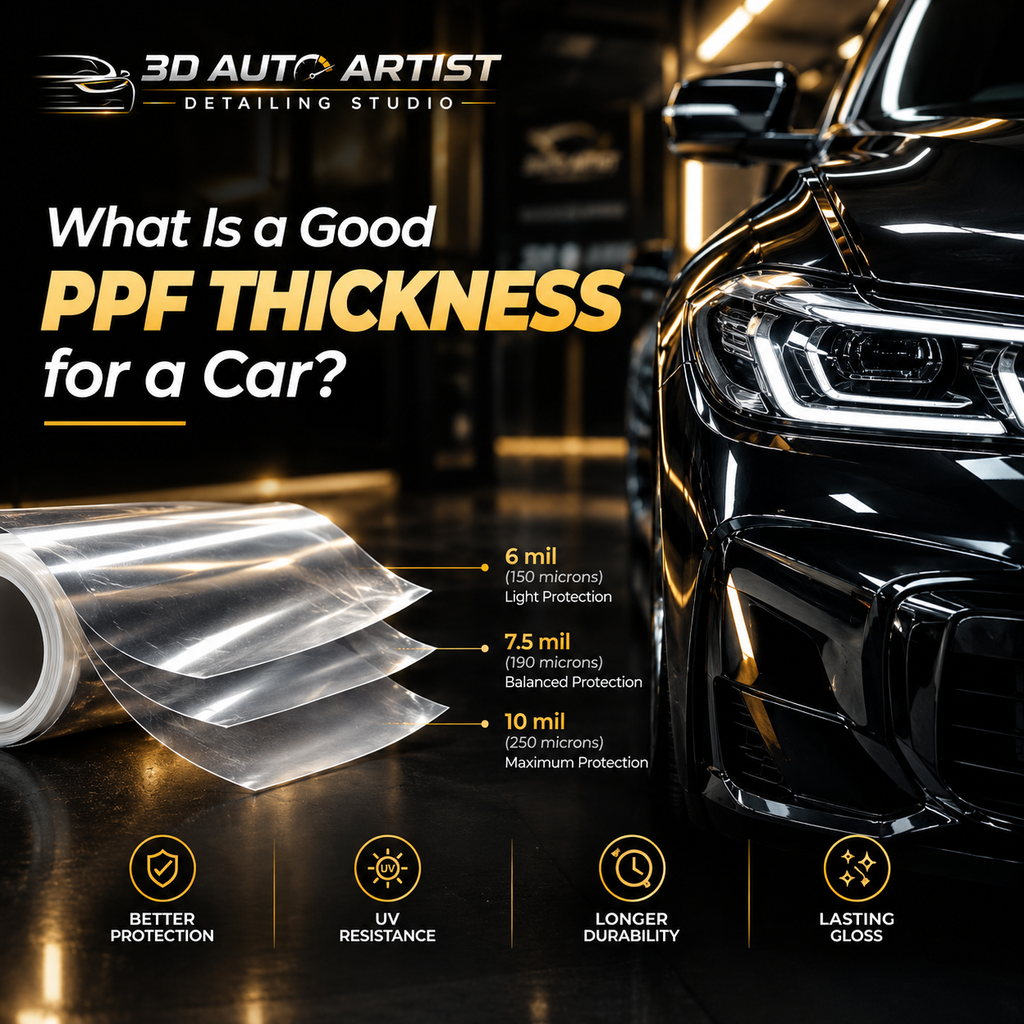
There is no single best PPF thickness that suits every vehicle.
Many automotive PPF products are available around the 180–200+ micron range. The exact specification depends on the manufacturer and the way the product is measured.
For example, 3M’s India PPF information lists products at approximately 185, 190 and 200 microns, with different feature combinations and warranty periods.
So, instead of asking only:
“How many microns is this PPF?”
it is better to ask:
“What does this PPF offer as a complete protection system?”
This gives you a more meaningful way to compare different products.
180 Micron vs 190 Micron vs 200 Micron PPF
A higher number does not automatically make one PPF product better than another.
When comparing films, look at:
Thickness: Contributes to the physical barrier provided by the film.
Material: Influences flexibility and durability.
Top Coat: Affects the surface finish and resistance to everyday contaminants.
Self-Healing: Helps reduce minor surface marks on suitable films.
Clarity: Helps maintain the original appearance of the vehicle.
Hydrophobic Performance: Can make cleaning and maintenance easier.
Adhesive: Supports proper bonding and installation.
Conformability: Helps the film follow complex body panels.
Warranty: Shows the manufacturer’s stated coverage.
Installation Quality: Has a direct impact on the final appearance of the PPF.
This is why choosing a PPF based only on its micron number can give you an incomplete comparison.
Does Thicker PPF Affect Installation?
PPF thickness can influence the way the film behaves during installation.
Modern vehicles have complex body shapes, sharp edges and curved panels. Areas such as bumpers, ORVMs, fenders and bonnet edges require careful handling.
The installer needs to position the film accurately while maintaining proper coverage and avoiding unnecessary tension.
Professional PPF installation therefore requires attention to:
- Surface preparation
- Pattern accuracy
- Film positioning
- Panel contours
- Edge finishing
- Stretching technique
- Final inspection
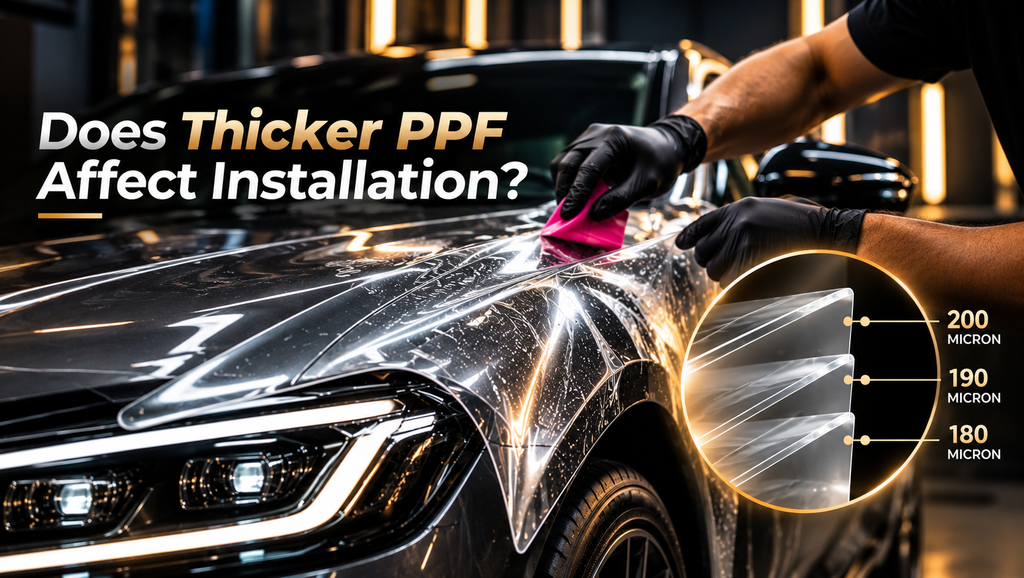
A high-quality film still needs proper installation to achieve a clean and consistent finish.
What Should You Check Before Buying PPF?
Before choosing a Paint Protection Film, don’t focus only on the micron specification.
Ask about the complete product.
Check the PPF Material
Understand what material the film uses and how it is constructed.
Check the Actual Thickness
Ask whether the quoted micron measurement includes the adhesive or refers only to the film.
Check Self-Healing Technology
If self-healing is important to you, check the manufacturer’s technical specifications and warranty information.
Check the Top Coat
Look at properties such as gloss, stain resistance, hydrophobic performance and surface durability.
Check the Warranty
Understand what the manufacturer’s warranty covers and what conditions apply.
Check the Installation Process
Ask how the vehicle will be prepared, how the film will be patterned and how the edges will be finished.
Why Professional PPF Installation Matters
Choosing the right PPF thickness is only the beginning.
Before installation, the vehicle should be thoroughly cleaned and inspected. If the paint contains scratches, swirl marks or other imperfections, paint correction may be considered before PPF installation.
During installation, accurate patterns and careful application help achieve consistent panel coverage.
Professional installation can help minimise problems such as:
- Uneven application
- Poor edge finishing
- Visible lift lines
- Contamination underneath the film
- Excessive stretching
- Incorrect panel coverage
PPF manufacturers also provide installation guidance and recommend professional installation for their automotive protection films.
Is Higher Micron PPF Worth It?
A higher micron specification can be useful, but it should be considered together with the rest of the product specifications.
Instead of choosing PPF simply because it has the highest thickness, compare:
Thickness + Material + Top Coat + Adhesive + Self-Healing + Flexibility + Warranty + Installation
This approach gives you a clearer understanding of the PPF’s overall characteristics.
Final Thoughts on PPF Thickness
So, does more micron mean better protection?
Not necessarily.
PPF thickness is an important specification, but it does not tell the entire story. The quality of the material, top coat, adhesive, self-healing technology, clarity, flexibility and installation all contribute to the final result.
A 200-micron PPF may be thicker than a 180-micron film, but thickness alone cannot determine which product is more suitable for your car.
At 3D Auto Artist, we focus on the complete PPF solution rather than looking at one specification in isolation.
When choosing Paint Protection Film, consider the complete combination of protection, technology, appearance, warranty and installation quality.
Protect Your Car With 3D Auto Artist
Looking for professional car PPF and Paint Protection Film installation?
At 3D Auto Artist, we provide automotive paint protection solutions designed to help preserve your vehicle’s original finish and maintain its premium appearance.
Choose PPF based on complete performance, not just the micron number.
Contact 3D Auto Artist to explore the right PPF solution for your vehicle.