

Choosing the right Paint Protection Film (PPF) for your car is an important decision. PPF can help protect the original paint from road debris, minor scratches, stains and everyday wear.

When comparing Saint-Gobain vs Garware PPF, it is important to look beyond the brand name. The exact film variant, warranty, finish, protection features and installation quality can all affect your experience.
Both brands offer different PPF options, so understanding these differences can help you make a more informed choice.
What Is Paint Protection Film?
Paint Protection Film is a protective layer applied over the painted surfaces of a vehicle. It is designed to reduce the impact of common road and environmental damage.
Depending on the product, modern PPF can offer features such as:
- Self-healing technology
- Hydrophobic properties
- Chemical resistance
- Stain resistance
- UV protection
- Anti-yellowing performance
- High optical clarity
PPF is commonly installed on areas such as the bonnet, front bumper, fenders, ORVMs, door edges and side skirts.
The level of protection depends on the film selected and the quality of installation.
Saint-Gobain PPF: What Does It Offer?
Saint-Gobain has different PPF products designed for different protection requirements.
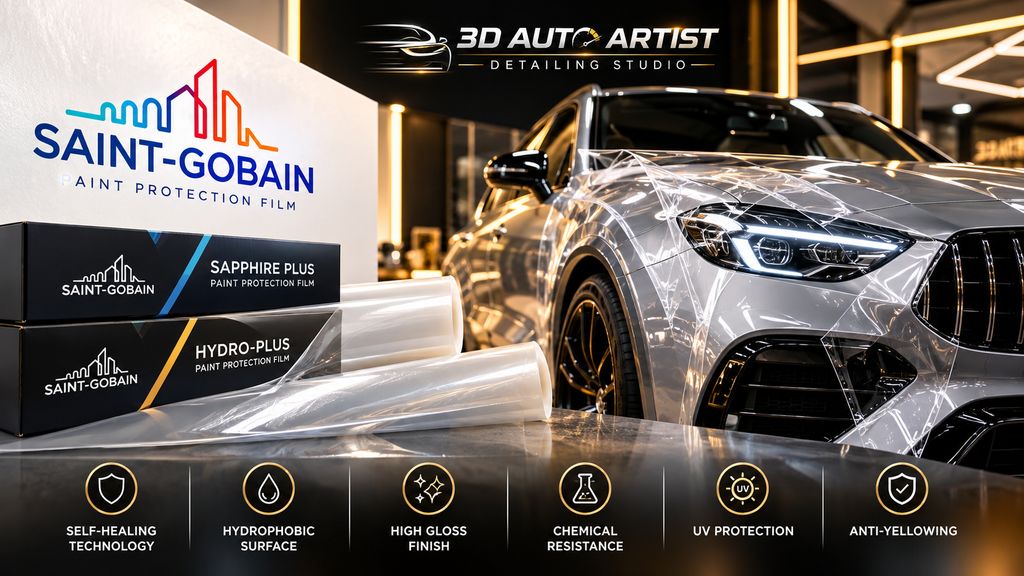
Its Sapphire Plus PPF is listed with features such as self-healing, high gloss, hydrophobic performance, chemical resistance and anti-yellowing properties. The current Saint-Gobain India product information lists a 5-year warranty for Sapphire Plus.
Saint-Gobain also offers Hydro-Plus PPF, which is positioned as a higher-level protection option with features including a high-gloss surface, hydrophobic performance, self-healing and chemical resistance. The current India product page lists a 10-year warranty for Hydro-Plus.
This means that even within the Saint-Gobain range, specifications can vary between products.
Important Factors to Check
When considering Saint-Gobain PPF, look at:
- Exact product variant
- Warranty period
- Film finish
- Self-healing performance
- Hydrophobic properties
- Chemical resistance
- Installation requirements
Always check the warranty applicable to the exact film being installed.
Garware PPF: What Does It Offer?
Garware offers a range of PPF products for different requirements and finishes.
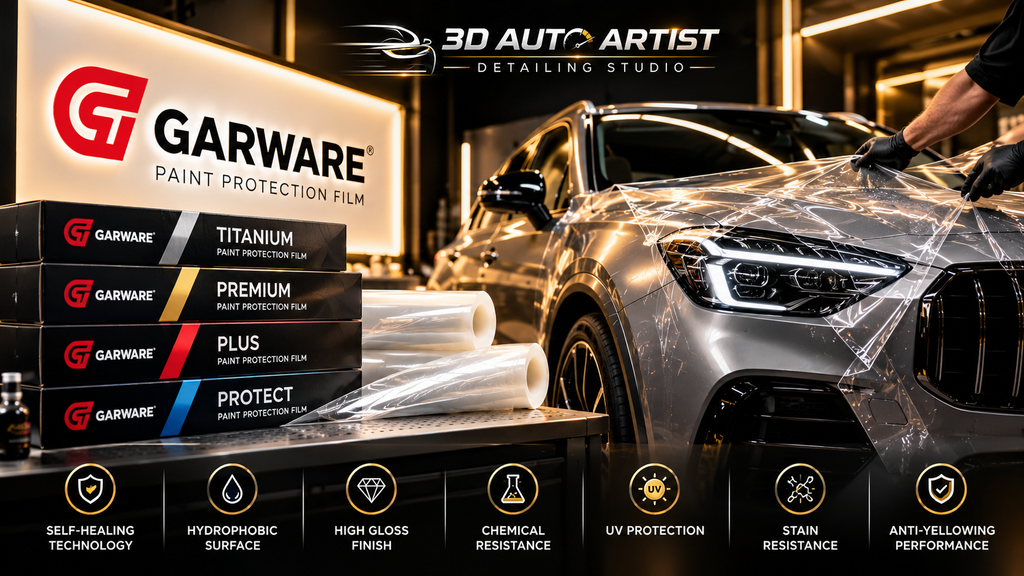
Its current range includes Protect, Plus, Premium, Titanium, Matte, Black and White PPF.
Different products come with different specifications and warranty periods.
For example, Garware Protect is listed with a 3-year e-warranty, while Garware Plus has a 5-year e-warranty. Garware Premium is listed with an 8-year warranty, while Titanium is listed with a lifetime e-warranty for first-time ownership, subject to the manufacturer’s terms.
Several Garware products also include features such as self-healing, hydrophobic performance, stain resistance, chemical resistance and anti-yellowing properties.
Saint-Gobain vs Garware PPF: Key Factors to Compare
Instead of comparing only the two brand names, consider the following factors before selecting your PPF.
1. Film Quality and Technology
The construction of the film plays an important role in its performance.
Look for features such as self-healing, optical clarity, hydrophobic behaviour, chemical resistance and anti-yellowing properties.
It is also important to compare the specific product variants, because different films from the same manufacturer can have different specifications.
2. Warranty
Warranty is an important part of any PPF purchase.
Saint-Gobain and Garware offer different warranty periods across their product ranges. However, the warranty period should not be the only factor you consider.
Before installation, ask about:
- Warranty duration
- What the warranty covers
- Installation requirements
- Maintenance conditions
- Warranty exclusions
Understanding these details can prevent confusion later.
3. Gloss and Finish
The appearance of PPF can have a major effect on the overall look of your vehicle.
For a traditional appearance, many car owners prefer a clear, high-gloss PPF that maintains the original character of the paint.
If you want a different appearance, matte or coloured PPF can create a more distinctive finish.
Garware currently offers options such as Matte, Black and White PPF in addition to its clear films.
4. Self-Healing Performance
Self-healing is one of the popular features of modern PPF.
The top surface of a self-healing film can reduce the visibility of certain minor marks when exposed to suitable heat.
However, self-healing does not mean that the film can repair every type of damage. Deep cuts, punctures and severe physical damage may still require film replacement.
Both Saint-Gobain and Garware offer PPF products with self-healing features.
5. Installation Quality
The quality of installation is just as important as the film itself.
A professional PPF installer should pay attention to:
- Surface preparation
- Pattern alignment
- Film positioning
- Edge finishing
- Panel coverage
- Stretching technique
- Clean working conditions
Poor installation can result in visible edges, contamination, lifting or an uneven finish.
That is why choosing the right installer is an important part of choosing the right PPF.
6. Your Driving Conditions
Your daily driving pattern should also be considered.
If you regularly drive on highways or roads with heavy traffic and loose debris, protecting high-impact areas can be particularly useful.
For premium vehicles or cars that are driven frequently, you can also consider wider coverage or full-body PPF.
The ideal coverage depends on your vehicle, driving conditions and budget.
Saint-Gobain vs Garware: Which PPF Should You Consider?
There is no single PPF variant that is suitable for every car owner.
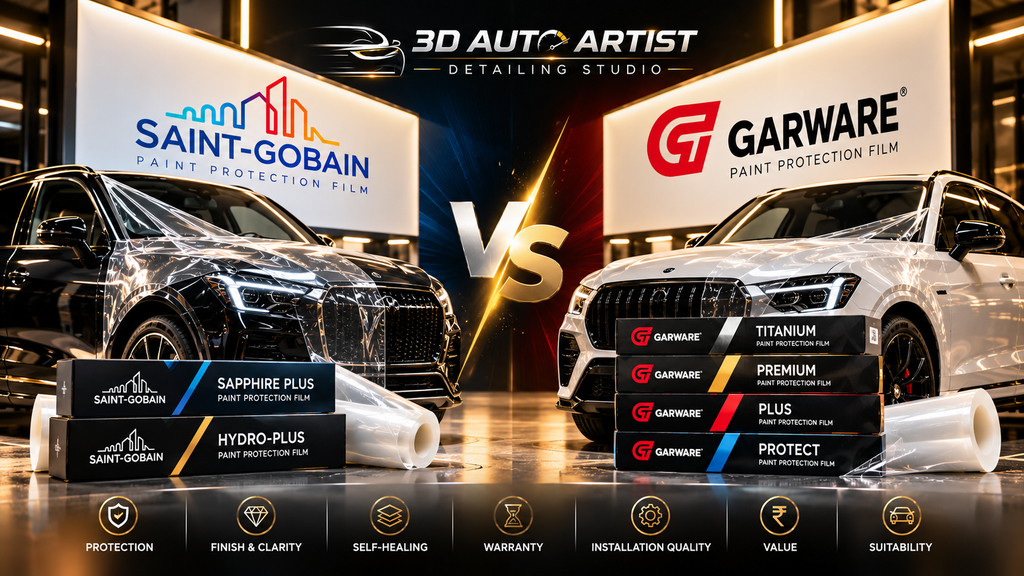
Saint-Gobain offers products such as Sapphire Plus and Hydro-Plus, while Garware provides several options across different protection levels and finishes.
The better approach is to compare the exact film variant rather than choosing only by brand.
Before making your decision, consider:
Film specifications + warranty + finish + coverage + installation quality + maintenance + budget
At 3D Auto Artist, we help customers understand the available PPF options and choose according to their vehicle, driving conditions, preferred finish and protection requirements.
Final Thoughts
When comparing Saint-Gobain vs Garware PPF, the brand name is only one part of the decision.
Look carefully at the exact product, warranty terms, finish, protection features and installation quality. A professionally installed PPF can help maintain your car’s appearance while providing an additional layer of protection against everyday road and environmental damage.
The right PPF is ultimately the one that matches your vehicle, your usage and your protection expectations.
Frequently Asked Questions
Is Saint-Gobain PPF better than Garware PPF?
Both brands offer multiple PPF products with different specifications. Instead of comparing only the brands, compare the exact film variant, warranty, finish, features and installation quality.
Does Garware PPF have self-healing technology?
Yes. Several Garware PPF products list self-healing as one of their features.
Does Saint-Gobain PPF have self-healing?
Yes. Saint-Gobain’s Sapphire Plus and Hydro-Plus product information lists self-healing among their features.
Is PPF worth installing on a new car?
PPF can help protect painted surfaces from road debris, minor scratches and environmental contaminants. The amount of coverage depends on the vehicle and how it is used.
Does PPF installation quality matter?
Yes. Proper surface preparation, accurate installation, clean edges and correct finishing can significantly affect the appearance and long-term performance of PPF.