

Owning an Audi Q5 comes with one simple expectation: the car should continue to look as premium as it did on day one. Daily traffic, highway trips, dust, insects, and road particles can slowly affect the paint.

This is where paint protection becomes useful.
Two popular choices for an Audi Q5 are Paint Protection Film (PPF) and ceramic coating. Although both are used to protect the vehicle, they work in very different ways.
So, Audi Q5 PPF vs Ceramic Coating: which option makes more sense? Let’s understand the difference.
What Does PPF Do to an Audi Q5?
PPF is a transparent film that is fitted directly onto selected painted panels. Think of it as an extra layer between the road and your Audi’s original paint.
The film is especially useful on areas that receive more exposure. These can include the front bumper, bonnet, fenders, door edges, and ORVMs.
When small stones or road particles hit the car, the film takes much of the contact instead of the painted surface. Good-quality films can also help with minor surface marks.
For owners who spend a lot of time driving on highways, Audi Q5 PPF can be a useful way to preserve the factory paint.
Why Audi Q5 Owners Consider PPF
- Adds a physical layer over the paint
- Helps reduce stone-chip damage
- Helps protect against light scratches
- Keeps the original paint underneath intact
- Can be installed only on selected panels
- Premium films may include self-healing technology
How Does Ceramic Coating Work?
Ceramic coating takes a different approach.
It is applied as a liquid and allowed to cure on the vehicle’s surface. Once cured, it forms a thin protective layer over the paint.
The main attraction is the change in surface behaviour. Water forms small beads instead of spreading across the panel. Dust and other contaminants may also be easier to remove during a wash.
Another reason people choose ceramic coating for Audi Q5 is the visual finish. A professionally prepared surface can appear deeper, smoother, and more reflective.
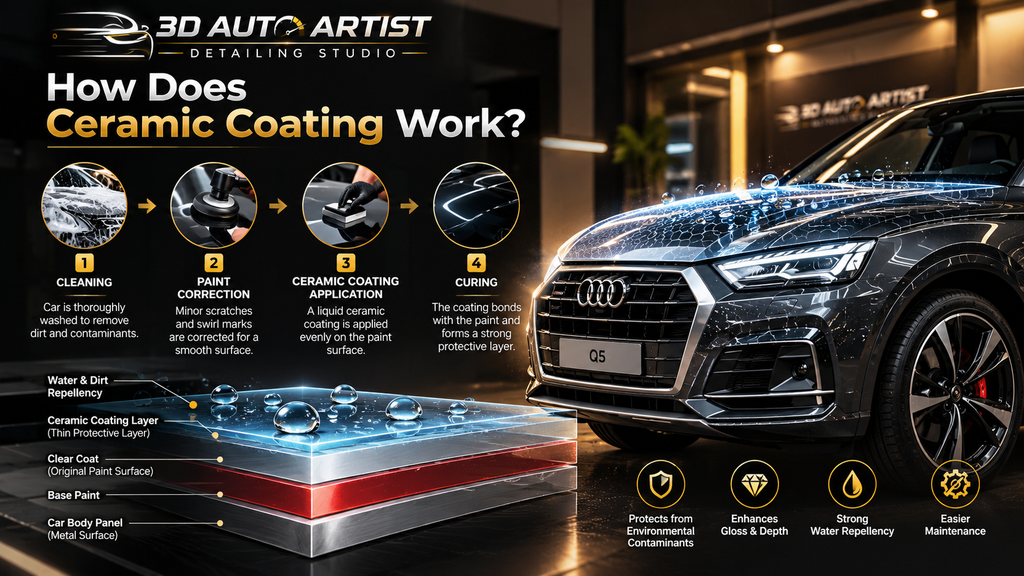
Main Advantages of Ceramic Coating
- Gives the paint a richer appearance
- Improves water behaviour on the surface
- Makes regular washing easier
- Helps reduce contamination buildup
- Adds another layer of surface protection
- Supports easier long-term maintenance
PPF vs Ceramic Coating: How Are They Different?
The simplest way to understand the difference is to look at what each product is designed to do.
PPF is mainly a physical defence. Ceramic coating is mainly a surface treatment.
Imagine a stone hitting the bonnet while driving. A ceramic coating is not designed to absorb that impact. PPF, on the other hand, provides a film layer that can help shield the paint.
Now consider rainwater, dust, and regular washing. Ceramic coating has an advantage here because its hydrophobic surface can make the vehicle easier to clean.
That is why comparing PPF and ceramic coating as if they are identical products can be misleading. They solve different problems.
Which Areas of an Audi Q5 Need More Protection?
Not every panel faces the same level of exposure.
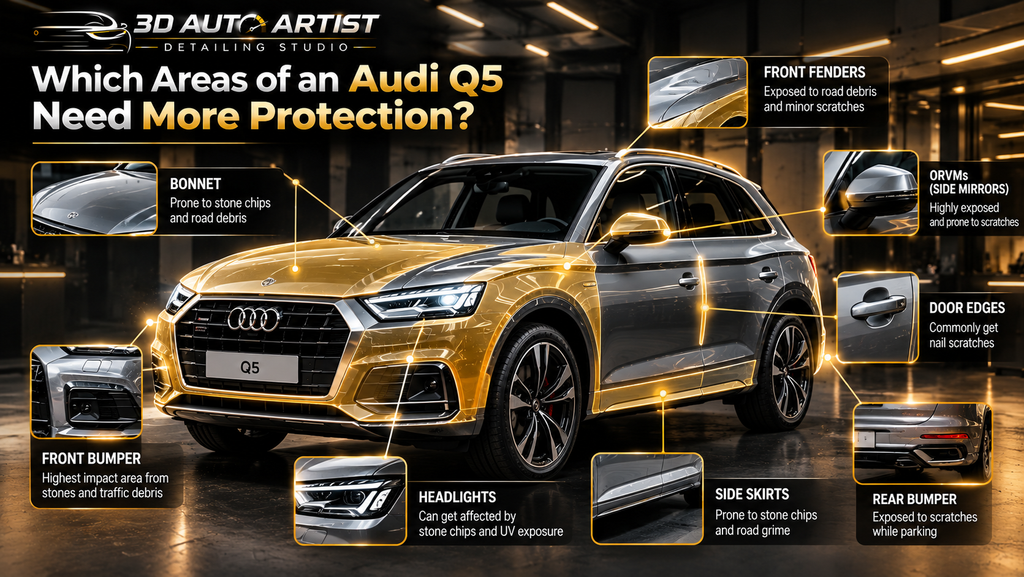
The front section usually receives more road debris. For this reason, many Audi Q5 owners consider protection for:
- Front bumper
- Bonnet
- Front fenders
- ORVMs
- Door edges
- Other high-impact sections
The exact coverage can be selected according to how and where the vehicle is driven.
A car that spends most of its time in city traffic may need a different setup from one that regularly travels long highway distances.
Can Ceramic Coating Be Added Over PPF?
In many cases, yes.
Using both treatments is a popular approach for premium vehicles. PPF can be used on sections that face more physical exposure, while ceramic coating can be used on suitable remaining surfaces.
A compatible coating may also be applied over the PPF, subject to the film manufacturer’s recommendations.
This creates a two-part protection system:
Ceramic coating → surface enhancement and water repellency
For an Audi Q5 owner who wants broader protection, this combination can be considered.
What Should You Choose for Your Audi Q5?
Your driving pattern should be the starting point.

PPF May Suit You If:
You regularly travel on highways, want to reduce stone-chip damage, or want a physical layer between the road and your paint.
Ceramic Coating May Suit You If:
Your main focus is a glossy finish, easier washing, water repellency, and simpler routine maintenance.
Both Can Be Considered If:
You want physical protection in important areas while also wanting the easier maintenance and surface characteristics associated with ceramic coating.
Why Paint Preparation Matters
Even the best protection product cannot hide poor preparation.
Before installing PPF or applying ceramic coating, the paint should be checked carefully. Swirl marks, scratches, oxidation, and other defects may need attention before the protection work begins.
At 3D Auto Artist, the Audi Q5 can be inspected before the treatment is selected. This helps match the protection package with the vehicle’s paint condition and the owner’s usage.
The aim is simple: prepare the surface properly first, then protect it with the right system.
Audi Q5 PPF and Ceramic Coating at 3D Auto Artist
At 3D Auto Artist, we work with premium automotive protection solutions for vehicles that require careful finishing.
Our services include:
- Paint Protection Film
- Ceramic Coating
- Paint Correction
- Exterior Detailing
- Interior Detailing
- Window Film Solutions

For an Audi Q5, the right package depends on the condition of the paint, daily usage, driving environment, and the level of protection you want.
Final Verdict: PPF or Ceramic Coating?
PPF and ceramic coating should not be treated as competing products with exactly the same purpose.
PPF is the option to consider when physical paint protection is your priority. Ceramic coating is better suited to owners who focus on gloss, water behaviour, and easier maintenance.
If you want both types of benefits, a combination of PPF and ceramic coating can provide a more complete approach.
The best choice for your Audi Q5 ultimately depends on how you drive, where you drive, and how you want to maintain the car over time.