

Paint Protection Film (PPF) is designed to help protect a vehicle’s original paint from everyday road damage while maintaining its appearance. But one common question car owners have is: How long does PPF last?
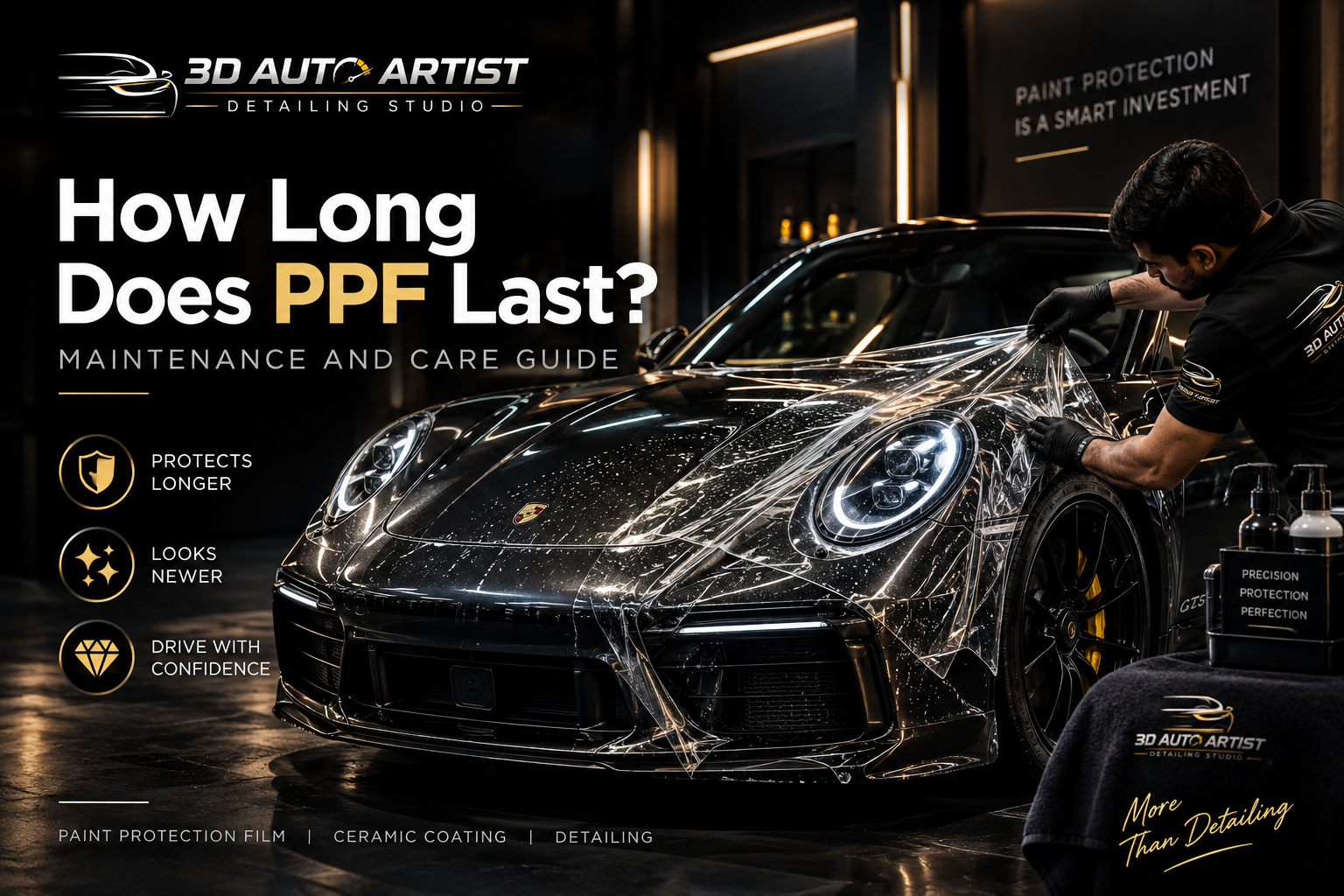
The answer depends on the quality of the PPF, installation, environmental exposure, driving conditions, and regular maintenance. With the right film and proper care, a professionally installed PPF system can provide long-term paint protection and continue looking clean and glossy.
At 3D AUTO ARTIST, we focus on proper surface preparation, professional PPF installation, and aftercare so your vehicle can maintain its finish for years.
What Is Paint Protection Film?
Paint Protection Film is a transparent protective layer applied over painted vehicle surfaces. It is commonly installed on high-impact areas such as the front bumper, bonnet, fenders, ORVMs, headlights, and door edges.
A quality PPF can help reduce the effect of everyday contaminants and minor surface damage, including:
- Stone chips and road debris
- Light scratches and scuffs
- Bug splashes
- Bird droppings
- Road grime
- Minor abrasions
- Environmental contaminants
The main advantage of PPF is that it provides protection while allowing the original colour and design of the vehicle to remain visible.
How Long Does PPF Usually Last?
The lifespan of PPF varies according to the film quality, manufacturer specifications, installation quality, climate, and maintenance routine.
Premium PPF products can be designed for several years of service when properly installed and maintained. However, there is no single lifespan that applies to every film.
For this reason, it is important to check the manufacturer’s warranty and recommended maintenance requirements before choosing a PPF.
What Affects PPF Lifespan?
Several factors can influence how long your paint protection film continues to perform.
1. Film Quality
High-quality polyurethane films are generally designed for better durability and long-term outdoor exposure.
2. Installation Quality
Even a premium film can develop issues if the vehicle is not properly prepared or the film is incorrectly installed.
3. Sun and Weather Exposure
Continuous exposure to strong sunlight, heat, rain, dust, and pollutants can affect the appearance and performance of protective films over time.
4. Driving Conditions
Frequent highway driving, construction areas, gravel roads, and heavy traffic can expose the film to greater levels of impact and contamination.
5. Maintenance
Regular and appropriate cleaning can help keep the film looking clear, smooth, and well maintained.
How Should You Maintain PPF?
Proper PPF maintenance does not have to be complicated. A consistent cleaning routine can help preserve the film’s appearance.
Wash Your Car Regularly
Use a proper automotive wash method and a clean microfiber towel. Avoid allowing dirt and contaminants to remain on the vehicle for extended periods.
Remove Contaminants Promptly
Bird droppings, insects, tree sap, and other contaminants should be removed as soon as reasonably possible. Leaving contaminants on the surface for long periods can make cleaning more difficult.
Avoid Harsh Chemicals
Use cleaning products that are suitable for automotive paint and PPF. Avoid aggressive chemicals, abrasive compounds, or cleaning methods that are not recommended for the specific film.
Be Careful Around Film Edges
During washing, avoid aggressive pressure directly against exposed film edges. Careful washing helps reduce the chance of lifting or damaging the film.
Can You Polish or Wax PPF?
Not every polishing, wax, or detailing product is suitable for every PPF.
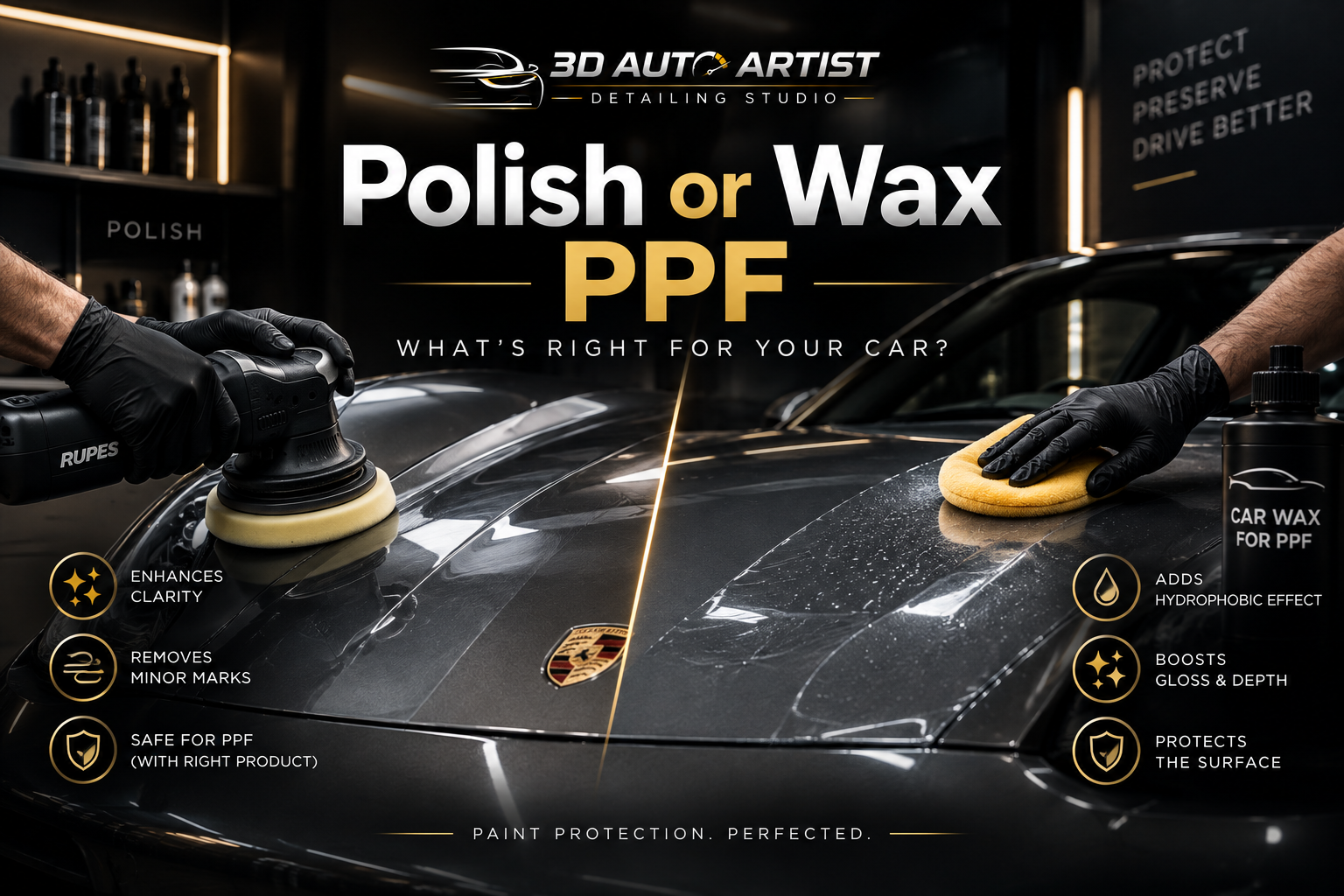
Before using a product, check the PPF manufacturer’s care instructions. Some films may have specific recommendations for compatible cleaners, sealants, or maintenance products.
If you are unsure, professional advice is better than experimenting with an unknown product.
When Should PPF Be Replaced?
PPF may eventually need replacement if it develops significant yellowing, cracking, lifting, excessive surface damage, or visible deterioration.
Small marks do not automatically mean the entire film needs to be replaced. A professional inspection can help determine whether the film can continue to be maintained or whether a particular panel should be replaced.
Does Professional PPF Installation Matter?
Yes. PPF performance is not only about the film itself.
Proper installation involves:
- Thorough vehicle cleaning
- Paint and surface preparation
- Correct film positioning
- Controlled application
- Proper edge finishing
- Careful installation around curves and contours
- Appropriate curing and post-installation care
Poor preparation or installation can affect the appearance and longevity of the film.
At 3D AUTO ARTIST, the objective is to combine quality PPF with precise installation so the protection integrates naturally with the vehicle’s original design.
How Can You Make Your PPF Last Longer?
A simple maintenance routine can make a significant difference:
Wash regularly → Remove contaminants quickly → Use PPF-safe products → Avoid abrasive cleaning → Follow manufacturer recommendations → Inspect the film periodically.
These simple habits can help maintain the clarity, finish, and protective performance of your PPF.
Is PPF Worth It for Long-Term Paint Protection?
For owners who want to preserve their vehicle’s original paint, PPF can be a practical form of paint protection. It is particularly useful for vehicles regularly exposed to highways, traffic, road debris, and demanding driving conditions.
The right film, professional installation, and proper maintenance should all be considered together rather than looking at the film’s price alone.
Protect Your Car With 3D AUTO ARTIST
At 3D AUTO ARTIST, we provide professional PPF installation and automotive detailing focused on protecting your vehicle while maintaining its premium appearance.
Proper installation + regular maintenance can help keep your car protected and looking its best for years.
At 3D AUTO ARTIST, we provide professional PPF installation and automotive detailing focused on protecting your vehicle while maintaining its premium appearance.
From selecting the appropriate coverage to preparing the paint and installing the film carefully, every stage matters when you want long-term protection.
Protect your paint. Preserve the finish. Drive with confidence.